Bowie, Maryland
Crawl Space Repair in Bowie, MD
Crawl Space Repair in Bowie, Maryland, with published price ranges up front, the movement measured and the cause named on site, and one written figure before any work begins.
Bowie, Maryland
Crawl Space Repair in Bowie, Maryland, with published price ranges up front, the movement measured and the cause named on site, and one written figure before any work begins.
Plenty of Bowie homes hide their hardest working structure in a space nobody visits. Additions, ranch sections, and homes across Melford sit over crawl spaces where joists, beams, and piers carry the floors above, until a floor turns spongy or a door starts to drag. We repair crawl spaces in Bowie, addressing the wood, the supports, and the moisture together, because in that low dark space those three are rarely separate problems.
Moisture usually opens the story. Bowie clay holds water against the foundation, vents admit humid summer air that condenses on cool framing, and the ground gives up vapor year round. Wood that stays damp softens, fungi find it, insects follow, and a pier heaved by wet soil or settled into dry shrunken soil stops carrying its share.
Joists lead the list, sistered or replaced where rot or insect work has thinned them past usefulness. Main beams sag between piers spaced for a lighter house, or piers that have sunk since. Piers themselves crack, lean, or sit on footings too small for the clay beneath them.
Each finding points at a cause, repaired alongside the damage. Sistering a fresh joist beside a rotten one while leaving the water source running simply schedules the next repair.
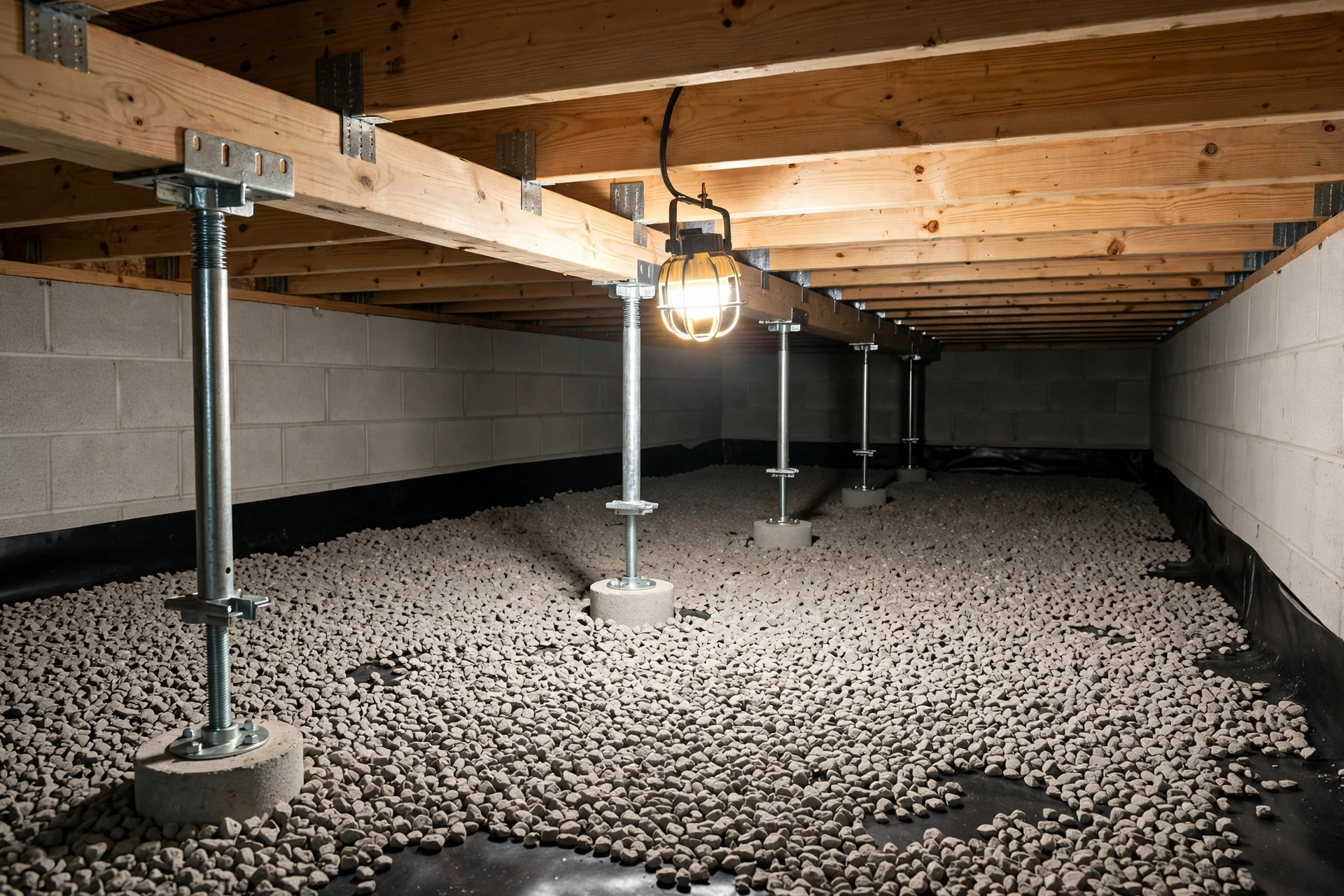
Access shapes the early hours. Some Bowie crawl spaces allow working room; others demand low, slow movement that stretches every task,. Debris and failed insulation come out first. Supports are stabilized, damaged joists and beam sections are repaired or replaced, piers are rebuilt or supplemented, and bearing points are releveled in small steps so floors rise gently.
Moisture work closes the sequence: ground vapor coverage where the scope calls for it, drainage correction where water enters. Structural work under a home in Prince George's County falls within the DPIE permit framework where permits apply, and foundation repair in Maryland is MHIC regulated home improvement work, stated as market facts.
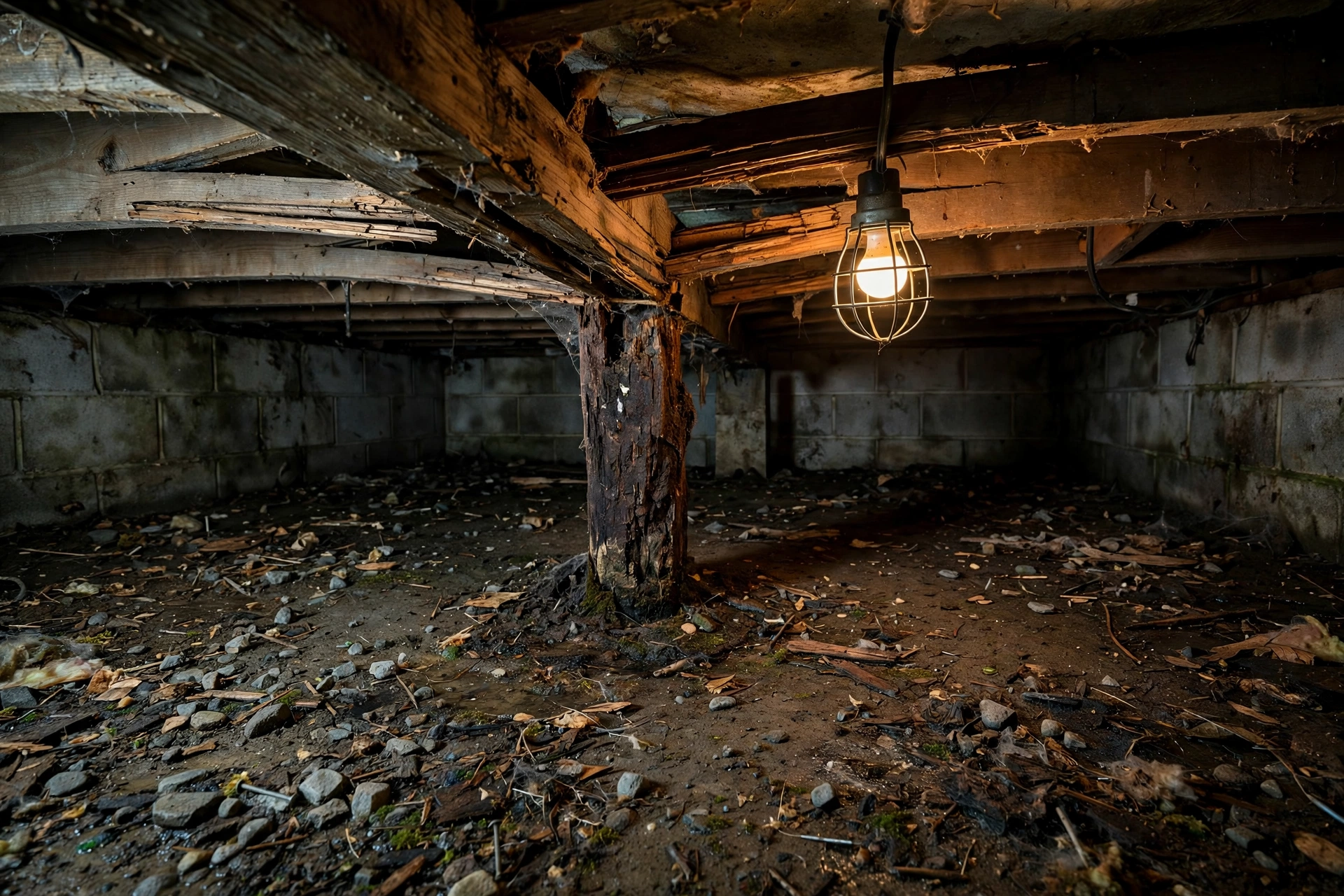
A Melford home had a soft, sloping floor over its crawl space, traced below to two rotted joists, a sagging main beam section, and a pier that had settled into the soil. We stabilized the load, sistered sound lumber to the damaged joists, rebuilt the failed pier on a proper footing, and releveled the beam line in stages. Ground vapor coverage and a corrected exterior discharge addressed the moisture that started the damage.
Plan from published figures, labeled as published figures, because no Bowie company publishes a local price list. Published figures put crawl space repair in Bowie at $3,600 to $9,400 for a typical residential scope. Broader published anchors include the Modernize Maryland foundation repair range of $2,800 to $9,500 and published national guides placing the national average foundation repair job at about $5,166 to $5,174.
The count of damaged members sets the figure more than any other factor. Two sistered joists and one pier rebuild sit low in the range. Extensive beam work, several piers, and tight access sit high. Moisture scope matters too, since ground coverage and drainage correction add real material and labor.
Homeowners often ask whether repair means the full sealed encapsulation they have seen advertised. The two solve different problems. Repair restores structure and corrects active moisture sources. Encapsulation seals the space entirely, lining ground and walls and controlling air.
Many Bowie homes need repair first either way, because sealing over rotted joists only hides them. Our recommendation follows the framing we find: sound structure with heavy moisture may argue for encapsulation on a separate scope.
Published figures put a typical residential crawl space repair in Bowie at $3,600 to $9,400. Damaged joist count, pier work, access, and moisture scope set your place inside that range.
Settled or undersized piers, moisture damaged joists and beams, and soil movement under footings share most of the blame in Bowie. Sagging develops slowly, then seems to change within one season.
Often, yes. Sistering a new joist alongside a damaged one restores strength where enough sound wood remains. Joists rotted through at bearing points are replaced instead.
Where the smell rises from damp framing, standing water, or mold below the floor, correcting those sources usually improves it markedly.
Small scopes finish in two or three days, while multi pier repairs in tight access can run a week. Your timeline is set from the inspection findings and stated with the scope.
Almost never. Work happens below the floor, though noise and vibration carry up during cutting and leveling. We flag the louder days in advance so the household can plan around them.
Tell us what your foundation is doing. We read every request that comes in and respond with the published range for that kind of work and the next step, starting with a visit to measure the movement and find its cause.
Prefer to talk it through first? Send the form and we will call you back at the number you give us.