Bowie, Maryland
Foundation Settlement Repair in Bowie, MD
Foundation Settlement Repair in Bowie, Maryland, with published price ranges up front, the movement measured and the cause named on site, and one written figure before any work begins.
Bowie, Maryland
Foundation Settlement Repair in Bowie, Maryland, with published price ranges up front, the movement measured and the cause named on site, and one written figure before any work begins.
Settlement repair begins with a question, not a product. Which part of the house moved, how far, and is it still moving? We provide foundation settlement repair for Bowie homes where footings have dropped unevenly, leaving cracked walls, sloping floors, and doors that no longer fit their frames. Our work pairs careful diagnosis with the right stabilization method for the wall that actually failed, instead of selling one system for every crack in the city.
Uniform sinking rarely harms a house. Trouble starts with differential settlement, where one footing drops and the footing beside it holds. Walls cannot bend to follow that difference, so they crack.
Clay behaviour under the city explains many cases. Bowie sits on clay heavy soils of the Atlantic Coastal Plain, and that clay swells when wet and shrinks when dry. Soil under a shaded north wall stays moist longer than soil under a sunny south wall baked through August. One footing keeps support while the other loses it, season after season, until the gap shows in mortar and drywall.
Original construction adds its own risks in older sections. Levitt built Belair quickly in the 1960s, and many homes rest on shallow footings with block walls. Some footings sit partly on cut soil and partly on fill that compacts over decades, so one footing inherits two rates of movement.
Water and trees push the pattern further. A downspout pouring beside one corner saturates clay there while the rest of the wall stays firm, softening support exactly where roof runoff lands. Across the yard, a mature oak pulls moisture from beneath another footing all summer.
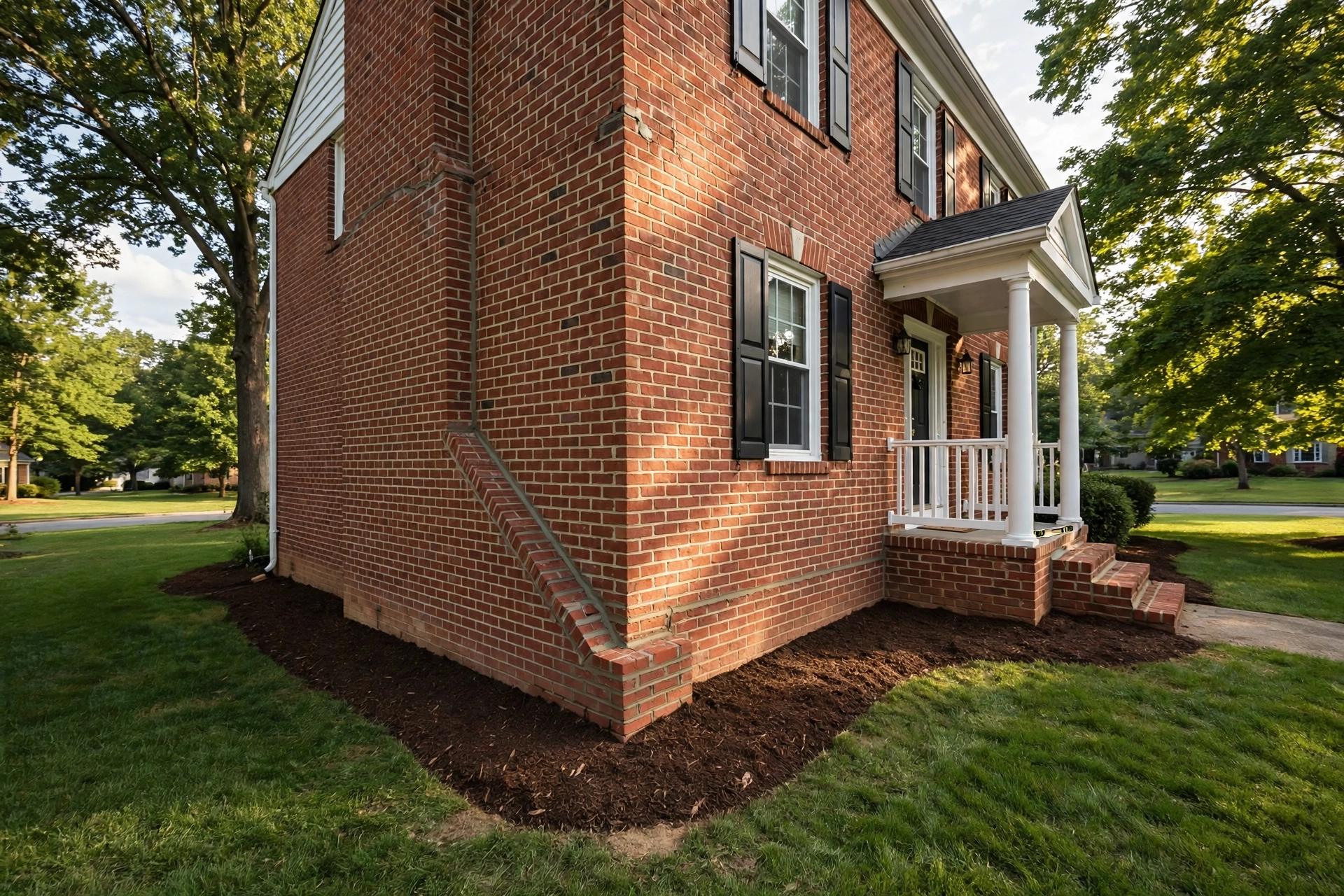
Outside, read the walls like a record. Stair step cracks through block mortar usually mark a dropping corner or a mid wall section losing support. Vertical cracks wider at the top than the bottom suggest rotation as a section tips outward while sinking.
Inside, daily annoyances carry real information. Doors rub on one side, latch only when lifted, or swing open on their own. Windows painted shut years ago may be innocent, but windows that newly bind in their frames deserve a look. Drywall cracks radiating from door and window corners, floors sloping toward one wall, and cabinets pulling from the wall all help locate the low zone when charted together. Crack width matters less than crack pattern, and pattern matters less than pattern matched against elevation readings.
Booking starts with the quote form at the bottom of this page. Tell us what you have noticed and how long it has been changing. At the site visit we survey elevations across the home, document cracks inside and out with measurements, inspect footings where visible, and review drainage, grading, and tree positions around the low sections.
Diagnosis comes before any repair recommendation. Your written report separates cosmetic cracking from active settlement, names the walls involved, and lays out the stabilization method fitted to each one, which may involve piering, wall support, crack repair, or drainage correction in combination. Foundation work in Maryland is home improvement work regulated under the MHIC, stated here as a market fact about the trade. Structural work at Bowie addresses is permit work through Prince George's County DPIE, and scopes are prepared with that county process in mind in general terms.
Repair then follows the written plan. Stabilization stops the movement first, any controlled lift happens second and only where the plan calls for it, and cosmetic work such as repointing mortar or patching drywall waits until the structure holds still. Rushing cosmetics ahead of stabilization means fresh cracks in new paint. Final readings repeat the diagnosis points for comparison.
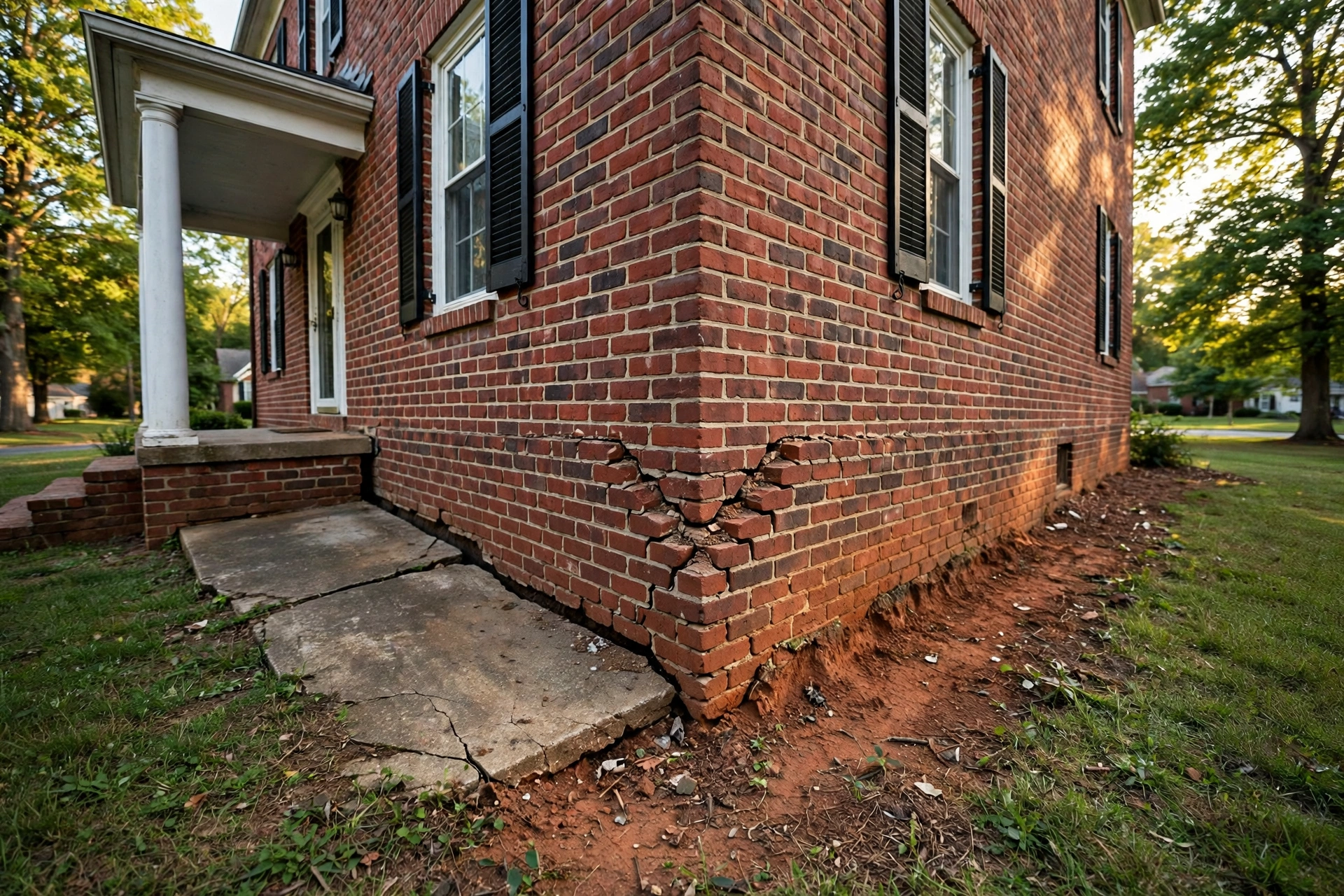
A White Marsh two story showed drywall cracks over three door frames, a front door that needed lifting to latch, and stair step cracking at the southwest corner. Elevation survey found that corner down along a short run while the rest of the house held near original level. We stabilized the dropping run with pier support, made a modest partial lift until the front door latched under its own weight, and corrected a downspout that had poured beside the corner for years. Mortar and drywall patching followed after final readings confirmed the corner was holding.
Planning starts from published figures because no Bowie company publishes a local price list, and every figure in this section is a published figure. Published planning figures put foundation settlement repair at $6,800 to $19,500 for a typical Bowie scope stabilizing one settled section of a home. Modernize publishes a Maryland foundation repair range of $2,800 to $9,500 for foundation work generally, while published national guides place the national average foundation repair at about $5,166 to $5,174 per job. Published piering figures commonly run $1,000 to $3,000 per pier, with multi pier projects at $8,000 to $25,000 and up.
Scope decides where your home lands. A short corner run with a handful of piers sits far below a two wall scope with lift work and finish repairs. Soil depth to stable bearing, access along the wall, and damage already done to finishes all shape the total. Minor cosmetic cracking with no active movement may need no structural spend at all, and our diagnosis will say so plainly when readings support it. Your firm figure arrives with the written plan after the survey.
Every settlement method looks convincing in a brochure. Piers, wall systems, and lifting techniques each solve a specific failure, and each fails when aimed at the wrong one. Spending on the wrong system leaves the real movement untouched while the invoice suggests the problem was handled.
Monitoring has a place in honest diagnosis too. Some cracks reflect movement that ended years ago, perhaps from early fill compaction that has since finished, and readings over time can support a watch and patch plan instead of structural work. Where movement is active, the same evidence makes the case for acting before the next wet and dry cycle adds to the drop.
Published planning figures put a typical scope stabilizing one settled section at $6,800 to $19,500. Published piering figures run $1,000 to $3,000 per pier, and pier count along your settled run drives much of the total. Your firm figure comes with a written plan after an elevation survey at your home.
Pattern is the giveaway. Cracks clustering along one wall or corner, matched with sloping floors and doors sticking on the same side, point toward settlement. Hairline cracks scattered randomly, unchanged for years, usually reflect aging materials instead. An elevation survey settles the question with measurements rather than opinion.
Fresh crack edges, widening gaps, and doors growing worse season by season suggest active movement. Crack edges painted over long ago with no new separation suggest older movement. During diagnosis we measure and document the evidence, and where the answer stays unclear, monitoring points can confirm movement before structural money is spent.
Partial lift is common, full restoration is not promised. Much depends on how far the section dropped and how the structure adjusted around the drop. Stabilization always comes first, lift follows only where safe, and your written plan states the intended outcome before work begins.
Clay soil cycling between wet swelling and dry shrinking leads the list, especially where drainage concentrates water at one footing or trees dry soil at another. Shallow footings and mixed cut and fill ground under older homes add risk.
Most single section scopes finish within about a week on site, including stabilization, any lift work, and finish patching. Longer wall runs and deeper bearing soil extend the schedule. Your written plan includes timing for your scope, confirmed again before the start date.
Tell us what your foundation is doing. We read every request that comes in and respond with the published range for that kind of work and the next step, starting with a visit to measure the movement and find its cause.
Prefer to talk it through first? Send the form and we will call you back at the number you give us.