Bowie, Maryland
Foundation Inspection in Bowie, MD
Foundation Inspection in Bowie, Maryland, with published price ranges up front, the movement measured and the cause named on site, and one written figure before any work begins.
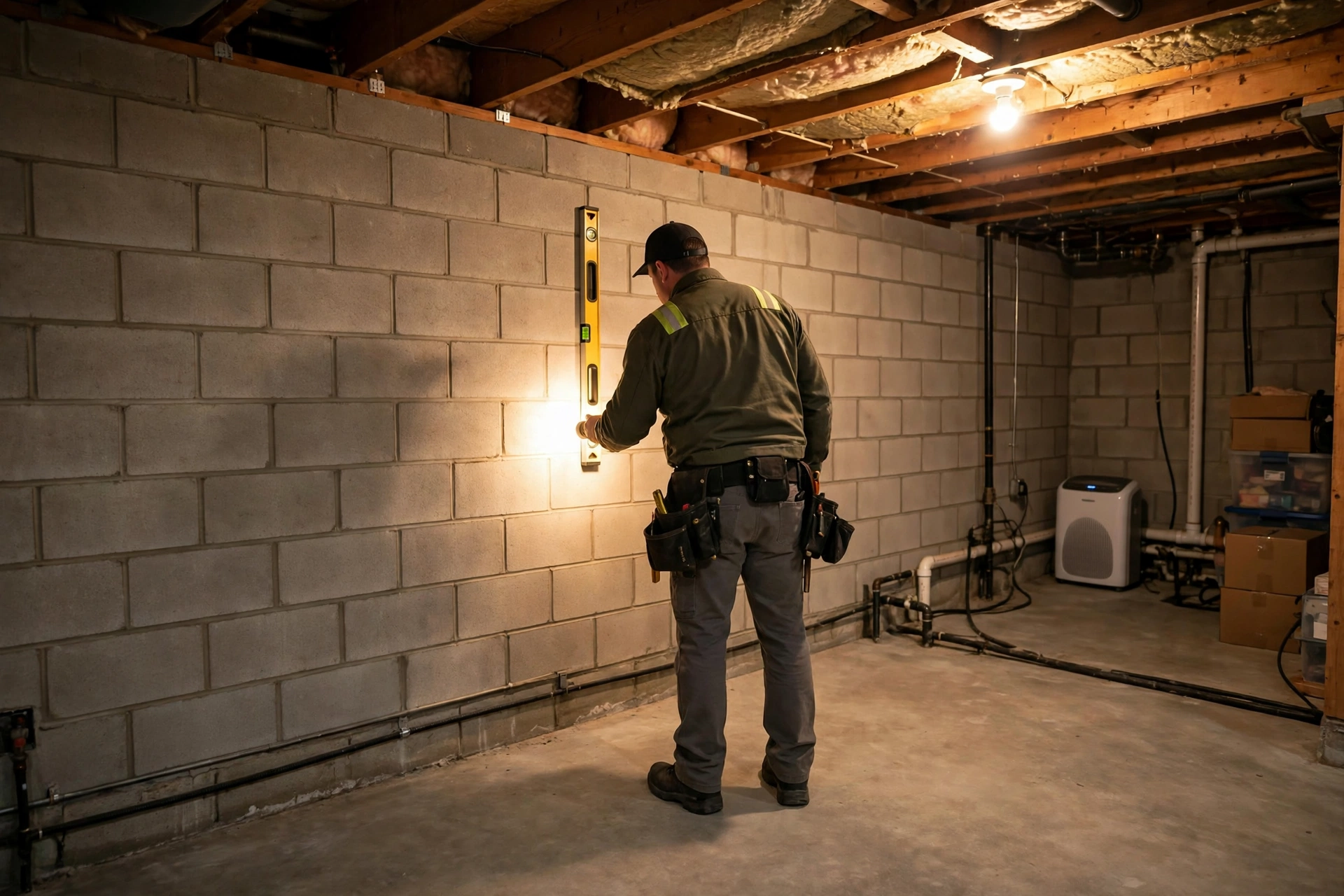
Bowie, Maryland
Foundation Inspection in Bowie, Maryland, with published price ranges up front, the movement measured and the cause named on site, and one written figure before any work begins.
A crack above a bedroom door rarely tells its own story. In Belair, where Levitt ranches and colonials from the 1960s sit on clay that swells after wet springs and shrinks through dry summers, that crack might trace back to seasonal movement at a shallow footing, or to settlement that keeps progressing. We inspect foundations across Bowie to separate those two cases, measuring what we find and tying each sign in the house to a cause below it.
An inspection is a fact finding visit, not a repair. Floors get checked for slope and walls for crack pattern and width, and the goal is a written record any later repair decision can rest on.
Outside, we walk the full perimeter and look at grade, drainage, and the footing line where soil meets wall. Downspouts dumping beside the foundation, soil sloping toward the house, and mature trees pulling moisture near the footing all enter the notes, because each changes how Bowie clay behaves against the wall.
Inside a Belair block wall basement, attention goes to stair step cracking in mortar joints, vertical cracks that widen toward one end, bowing, and water staining. Woodmore and Fairwood poured walls present differently, so there we check shrinkage cracks for stability and look for movement where additions meet the main house. Measurements and photographs are recorded as we go, and signs upstairs are matched against what the foundation shows.
Our inspection describes observable condition: visible foundation walls, accessible basement or crawl space areas, perimeter drainage, and related signs in the living space. Findings come in plain language with measurements, plus a next step for each item.
That scope has honest limits. An inspection does not produce an engineering certification, and it does not include a stamped engineering report. Where a condition calls for engineering analysis, the findings say so plainly, so the homeowner can take the record to an engineer of their choosing. Blocked areas are listed as not visible rather than guessed at.
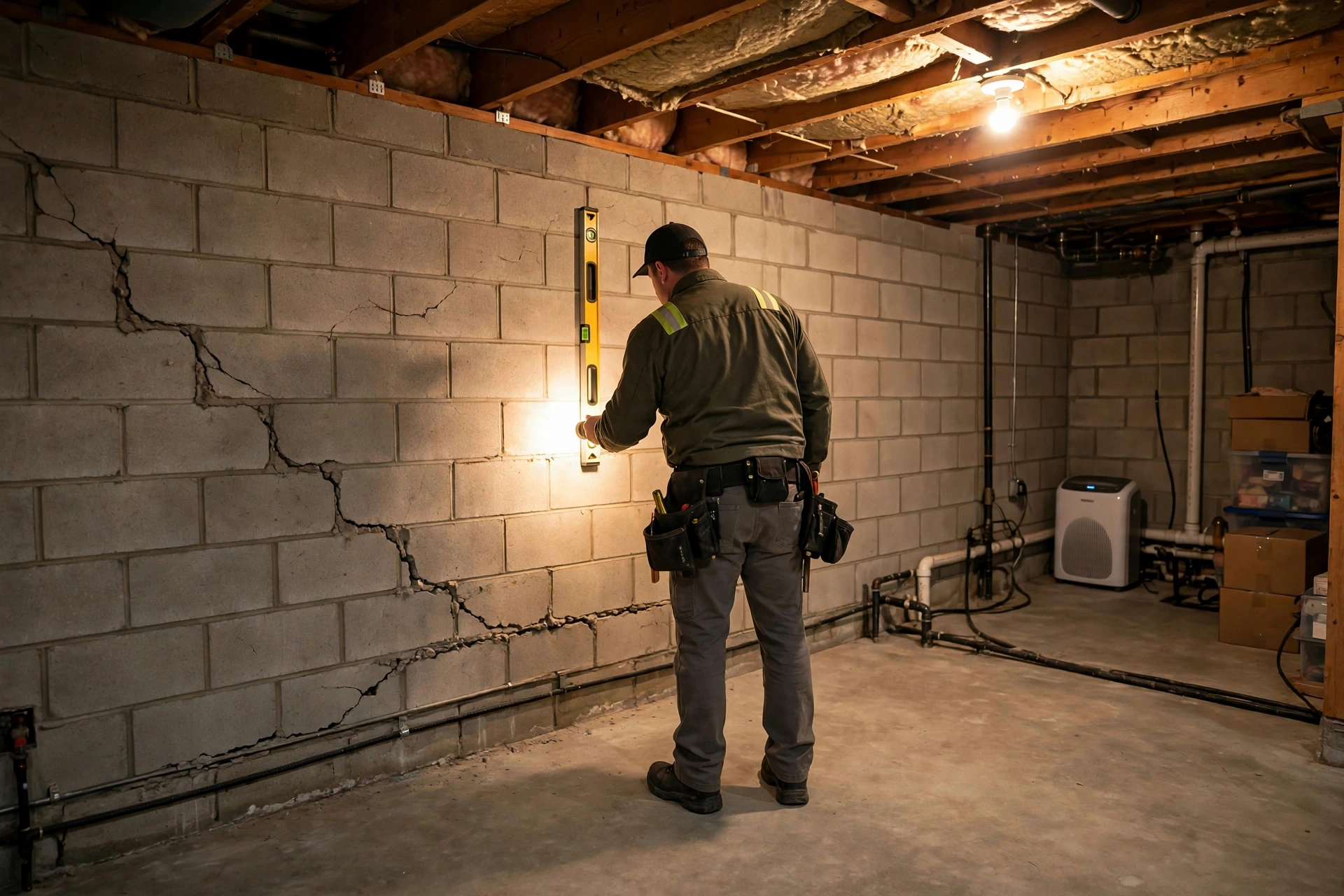
A Belair ranch showed stair step cracking in the rear block wall, a sloping den floor, and two doors rubbing their frames. We measured crack widths and floor levels across the house, walked the perimeter drainage, and traced the pattern to seasonal clay movement at the rear footing combined with downspout discharge pooling beside that wall. The findings separated stable hairline cracks from the active rear wall movement and listed drainage correction and monitoring points first.
Published figures guide the planning here, labeled as published figures because no Bowie company publishes a local price list. Our inspection band for Bowie homes runs $350 to $750. Broader anchors sit around it: a Modernize Maryland table puts foundation repair overall at $2,800 to $9,500, and published national guides put the average foundation repair at about $5,166 to $5,174.
Where an inspection lands inside the $350 to $750 band depends on house size, basement or crawl space access, and how much of the foundation is blocked from view. The figure is set before the visit.
Repairs sized without measurements miss in both directions. Piering a wall that only moves with the seasons wastes money, while patching a crack that reflects ongoing settlement buys a cosmetic fix and a returning crack. Bowie clay makes the order matter, since its movement can look dramatic in August and quiet down by winter.
Our published band is $350 to $750, set before the visit based on house size and access. Published repair anchors run higher, with a Modernize Maryland table at $2,800 to $9,500 overall, so the inspection figure covers the assessment itself, not repair work.
Written findings covering the areas inspected, the measurements and photographs recorded, what each sign most likely means, and a recommended next step for each item.
No. The inspection reports observable condition in writing, but it is not an engineering certification and it does not include a stamped engineering report. Findings that need engineering analysis are identified so you can arrange that separate evaluation.
Most Bowie homes take about one to two hours on site. Larger homes and houses with both a basement and a crawl space take longer, and written findings follow after the visit.
A single hairline crack in a poured wall is often stable shrinkage, while a crack that grows or leaks deserves measurement. Describe it in the quote form, including whether it has changed.
The findings name the problem and the repair options that fit the cause, scoped as a separate written quote. Nothing is repaired during an inspection visit.
Tell us what your foundation is doing. We read every request that comes in and respond with the published range for that kind of work and the next step, starting with a visit to measure the movement and find its cause.
Prefer to talk it through first? Send the form and we will call you back at the number you give us.